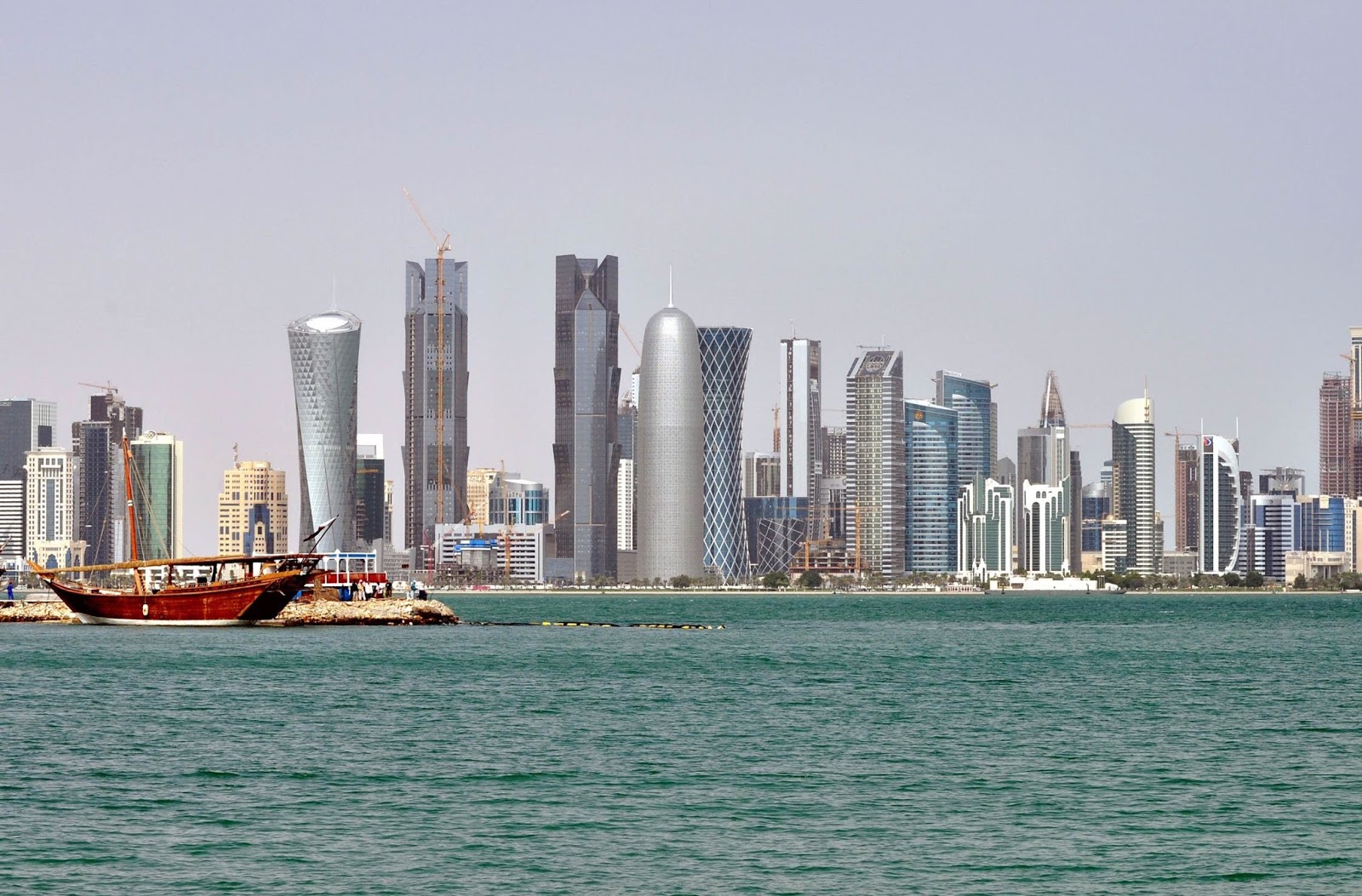
Showing posts with label Qatar. Show all posts

Wednesday, 19 August 2015


Did you know you can add a pronunciation guide to your name on Facebook? Overlay colorful text on the photos you post? How about mark the end of a relationship without your 500 closest friends getting notified?
Many of these tips and tricks aren't well known, even to veterans of the 1.5 billion-strong people-connector and time-waster. Facebook is constantly updating its service, adding new features or tweaking old ones. A lot can slip through the cracks even if you are scrolling through your friends' updates several times a day.
Here are a few ways to enhance your Facebook experience:
1. How do you say that?

More than 83 percent of Facebook's users are outside of the U.S. and Canada, and they use over 80 languages to communicate with friends and family. That's a lot of people, and a lot of different ways to say your name. To add a pronunciation guide, go to the "about" section of your profile and click on "details about you," (called "more about you" on mobile) then "name pronunciation." Here, Facebook will offer suggestions for your first and last name that you can listen to before selecting. If none work, you can also type in your own phonetic pronouncer.
2. One-time password
Logging in from a public computer? If you don't feel comfortable typing in your password on a shared machine that might have malicious software, Facebook lets you request a temporary one by texting "otp" to 32665. You'll get an eight-character passcode that works for the next 20 minutes and cannot be reused.
3. Unsubscribe
Anyone who's commented on a popular Facebook post, or belongs to a particularly chatty group, knows that those notifications telling you that "Jane Doe and 4 others also commented on a post" can get a bit annoying. You can turn off notifications for individual posts by clicking on the globe icon on the top right corner of your Web browser, then on the "X'' next to the individual notification. You can also change your notification settings here to get fewer or more of them for each group that you belong to.
To do this on mobile, click to view the original post, then click the down arrow in the top right corner of the post. You'll see an option to "turn off notifications."
4. Keep it on the down-low
Announcing engagements and marriages on Facebook is fun. Post and watch the likes and congrats roll in. Bask in the love and glory. Fast-forward a few years for some couples, and the glory fades, not to mention the love and marriage. In this case, you might not want to announce the irreversible breakdown to 450 of your closest friends.
Thankfully, you can still mark the end of a relationship without notifying everyone. Go to your profile and click on the "about" section, then "family and relationships on the left." Under relationship, you'll see a gray icon that probably says "friends," or maybe "public." Change it to "only me." Then change your relationship status. After a while, you can change it back if you wish. Your hundreds of acquaintances will be none the wiser, unless they are stalking your profile to see if you are single.
5. Picture perfect
Thanks to a popular but little-known new feature, Facebook lets you spruce up the photos you post by adding text and quirky stickers, such as drawings of scuba gear, sunglasses or a corn dog. This tool is available on iPhones and is coming soon to Android devices. To use it, choose a photo to upload and click the magic wand icon. Here, you'll find text overlay options as well as the same stickers you can use in other parts of Facebook.
6. Security check
Another recent addition to Facebook's trove of tools is a "security checkup" that guides users through a checklist aimed at making their account more secure. This includes logging out of Facebook on Web browsers and apps they are not using, and receiving alerts when someone tries to log in to their account from an unfamiliar device or browser. To use it, go to https://www.facebook.com/help/securitycheckup on your computer - this feature is not yet available on the mobile app.

Six Things You Didn't Know You Could Do on Facebook

Read More


Workers will be paid electronically either twice a month or monthly

Qatar on Tuesday officially launches one of its most “significant” labour reforms to guarantee migrant workers’ wages.

The Wage Protection System (WPS) aims to ensure that migrant labourers, many working on 2022 World Cup-related projects, will finally receive their pay on time.

Under the new system, workers will be paid either twice a month or monthly, and the wages electronically transferred direct to their bank accounts.

Failure to pay salaries on time, especially for blue-collar workers, has been one of the biggest complaints voiced by rights groups against companies in the Gulf state.

A 2013 academic study, “Portrait of Low-Income Migrants in Contemporary Qatar,” found that around a fifth of migrant workers were “sometimes, rarely or never” paid on time.

On August 18, a six-month grace period for businesses to ready for the electronic payment system expires.

From that date, companies which fail to pay staff on time could face fines of up to 6,000 Qatari rials (Dh6,052), be banned from recruiting new staff, and bosses potentially sent to jail.

Inspection teams will monitor the new system and identify any firms not complying with the regulations.

The WPS is being overseen by the labour ministry, which has previously pointed to its introduction as proof of Qatar’s commitment to labour reform.

In May, the ministry cited the WPS as an example of the “significant changes” being introduced in response to furious criticism of its labour practices since the controversial decision to allow Qatar to host football’s biggest tournament.

Amnesty International, which has previously criticised Qatar for its “slow” pace of reform, said the introduction of the WPS was “welcome”.

“It’s a positive step in principle,” said Amnesty’s Gulf migrant rights researcher, Mustafa Qadri.

However, Amnesty still has concerns about what will actually happen in practice following the deadline on Tuesday.

It has called on Doha not to make any last-minute concessions to business or extend the grace period and also to ensure the WPS will be rigorously enforced.

“We shouldn’t see August 18 as some sort of panacea, now we have the law, how will it be enforced?

“The government now has a benchmark it can apply to business. The government should effectively enforce this law,” added Qadri.

“We shouldn’t see August 18 as a deadline but a new beginning for Qatar.”

Doha has said it backs “effective and sustainable change” and says the WPS, like Qatar’s promise of accommodation improvements for 250,000 workers, demonstrates a commitment to this end.

But reform of the WPS only adds to the calls for change elsewhere, specifically the biggest reform of all, scrapping of the controversial kafala (sponsorship) system, which limits the movement of foreign workers.

Qadri called kafala the “elephant in the room” and said the changes being introduced on August 18 should open the door to further reforms.

He referred specifically to the ending of the controversial kafala system.

Qatar has pledged by the end of 2015 to abolish the system under which employers retain the passports of workers, who are not allowed to change jobs.

Source: http://gulfnews.com/news/gulf/qatar/qatar-to-launch-major-labour-reform-for-migrant-workers-1.1568486

Qatar to launch major labour reform for migrant workers

Read More

Monday, 17 August 2015


Overconsumption of water remains a key problem for Qatar as it moves forward, Dr. Adel Sharif of the Qatar Environment and Energy Research Institute (QEERI) has said during a speech at this week’s Qatar Foundation Annual Research Forum.

According to Sharif, Qatar’s residents use an average of 500 liters of water every day, making the country one of the world’s biggest consumers of water. Quality of life, lifestyle and the country’s harsh climate as the major reasons for the high usage – four times as much as many European countries, and 10 times more than many others, he added.

The UK, for example, averages 150 liters; Australia 290 liters; France 164 liters. However, Qatar’s neighbors also have extremely high usage – in the UAE, per capita water consumption is 550 liters. The global average is 250.
Desert state

Qatar, which is thought to have only a 48-hour emergency water supply, has attempted to decrease consumption with awareness campaigns. But changes in behavior would only have a limited affect, Sharif argues.

Instead, he added, Qatar should focus on developing solar-powered desalination technologies to help it produce more water without having an adverse effect on the environment. Gulf Times reports him as saying:


“Our vision is to solve tomorrow’s problems today through innovation. We need to adopt ‘step changes’ such as thinking out of the box, using new processes, novel technologies and new materials. This will help us find new solutions that will help not only Qatar but the entire world to come out of the water crisis.”

He also told the conference that Qatar aims to reuse 30 percent of its water by 2020. As part of this effort, Qatar University and Exxon Mobil are currently researching the best ways to treat industrial waste water so that it can be safely used for irrigation and park use.

Water security in Qatar – one of the world’s only true desert states, with no surface water – is a major challenge that requires significant scientific research, former first lady Sheikha Moza bint Nasser, chairperson of Qatar Foundation, also told the conference this week.

In her speech, Sheikha Moza stated her support for scientific research to improve desalination technologies.

Solar-powered desalination has been in Qatar’s plan for some time. Last year, the nation announced plans to build a solar-powered plant with the aim of producing 80 percent of its water needs through solar energy.

Fahad bin Mohammed Al Attiya, Chairman of the Organizing Sub-Committee for COP18/CMP8, told journalists that these plans were “at the final design stage,” and that it could begin operation in 2014, but thus far, no further details of the plan has emerged.

Last month, however, a deal was signed for a new desalination plant at Ras Abu Fontas, due to enter service in 2015. Media reports do not suggest it will be solar powered.

Qatar is also planning to build five “mega” reservoirs on the outskirts of Doha by 2016, a $2.7 billion plan that would increase the emergency water supply to seven days.

Thoughts?

Managing water supply a key challenge facing Qatar, expert says

Read More

Thursday, 13 August 2015


Qatar's Hamad International Airport (HIA) served a record 28 million passengers in its first year of operations, recording a 23.6 percent year-on-year increase from the number served in its previous hub at Doha International Airport (DIA).

From June 2014 to May 2015, HIA saw 28,047,750 passengers arriving, departing and transferring through the airport, The Peninsula reported.

It is a significant increase from 22.6 million passengers who travelled through the previous hub, DIA.

The new airport also handled more than one million metric tonnes of cargo in its first year, demonstrating a 12 percent increase compared to the previous hub.

Furthermore, HIA recorded an 11.4 percent increase in the number of handled aircraft, which now stands at 193,173, accommodating 36 airlines.

Since commencing operations on May 27, 2014, HIA has won numerous industry accolades – six Skytrax 2015 awards at Skytrax Airport Award ceremony at Passenger Terminal Expo 2015 in Paris, and the 'Strategic Project of the Year' award at 2015 Global Projects of the Year awards ceremony organised by CG/LA Infrastructure.

It also performed well in the surveys by Airport Service Quality in Q1 2015, which includes being ranked first in the Middle East for Cleanliness of Airport Terminal, Speedy Baggage Delivery and Comfort of Waiting Areas.

"We owe our accomplishments to our focus on customer satisfaction. We put the customer at the heart of everything we do," Badr Mohammed Al Meer, CEO at HIA, said.

Hamad International Airport Handles 28m Passengers In Its First Year

Read More


Qatar could be included on the Formula 1 calendar as early as 2016 as negotiations between organisers and Bernie Ecclestone reach an advanced stage.

Organisers first signalled a desire to join the F1 schedule earlier this year, though its inclusion is seemingly dependent on whether Bahrain chose to exercise a veto that would prevent another race being held in the Gulf region alongside its own event and the Abu Dhabi Grand Prix.

However, Nasser bin Khalifa Al-Attiyah, President of Qatar's motorsport federation and an FIA vice-president, insists a deal to bring F1 to Qatar as early as 2016 or 2017 has now been completed subject to final signatures.

“We are about to sign contracts to organise a Formula One race," al-Attiyah told AFP. "We have completed all the steps and there are only a few details before the official signature."

What isn't clear is whether Qatar will bring its Losail International Circuit up to a Grade 1 standard that would grant it the necessary licence to host F1, or whether it will go ahead and create a street race.

Either way, F1 would be the latest motorsport conquest for Qatar having already established itself as the traditional season opener for the MotoGP World Championship, the Losail venue also hosting the season finales of the World Superbike Championship and the World Touring Car Championship in 2015, all under floodlights.

However, should Qatar join the calendar in 2016, it would further swell a provisional schedule which – subject to confirmation – already includes new events in Azerbaijan and New Jersey, as well as a possible return to India.

Qatar closing on F1 race deal for 2016

Read More

Wednesday, 12 August 2015


Qatar General Electricity & Water Corporation (Kahramaa) intends to replace conventional meters in the Doha area by smart meters by 2016, an industry source has said.
Prime Minister and Minister of Interior HE Sheikh Abdullah bin Nasser bin Khalifa al-Thani had launched the smart meter system for remote readings of electricity and water consumption in January this year.
Smart meter deployment provides real-time information on the energy, water or natural gas consumption of a building.
At present, meter readings have to be conducted separately for water and electricity for each housing unit or building. This process is labour intensive and smart meters will help automate this process.
"In an endeavour to offer better energy management solutions to consumers, Kahramaa has leveraged the collaborative understanding of Information Technology and the power sector to launch its smart meter project," Expotrade, a global conference and event organiser, said.
The country's steady movement towards an overall smart energy approach is supported by the installation of smart grid projects and its related technologies such as smart meter that benefits consumers and energy providers in ways more than one.
Additionally, it enables Kahramaa to optimise energy consumption and promote energy efficiency.
Installing a smart meter helps keep a check on power distribution, monitors consumer usage and communicates revenue unit of energy data in real-time between any two-distribution points.
According to an industry study, smart metering market will reach 16.1mn units by 2022 and 86% of homes and businesses in the Gulf countries are expected to have smart meters by the same year.
One of the most advanced in the world, Qatar's smart meter system is based on a remote reading system that sends electronic readings to the energy supplier automatically.
It is equipped with consumption data recording modules for electricity and water as well as GPS modules for localising individual metering points.

Kahramaa switching to smart meters by 2016

Read More

Gas-rich Qatar pledged $50 million on Thursday to help Indonesia shelter Muslim Rohingya migrants from Myanmar, the official QNA news agency reported.
Indonesia, Malaysia and Thailand have all prevented vessels overloaded with starving migrants from Bangladesh and from Myanmar's ethnic Rohingya minority from landing on their shores.
Indonesia and Malaysia later responded to world pressure, saying they would no longer turn away migrant boats, offering to take in boat people provided they could be resettled or repatriated within a year.
But Thailand began a crackdown on smuggling following the discovery of mass graves there, which appears to have thrown regional human-trafficking routes into chaos.
The aid pledge was announced by Qatar's Emir Sheikh Tamim as he met visiting Indonesian Foreign Minister Retno Marsudi in Doha, who briefed him on "efforts by Indonesia and Malaysia in confronting the problem of refugees" from Myanmar and Bangladesh, QNA said.


He ordered a "donation worth $50 million (46 million euros) from Qatar to the Indonesian government to help it cover costs of hosting the Rohingya" migrants.
The International Organization for Migration has appealed for $26 million to help migrants in Southeast Asia.
Indonesian President Joko Widodo on Sunday indicated that Jakarta would need international help to foot the bill for housing thousands of destitute people.
More than 3,500 migrants have swum ashore or been rescued off the coasts of Malaysia, Indonesia, Thailand and Bangladesh since the crisis erupted earlier this month.
Thousands of Rohingya fleeing persecution in mostly Buddhist Myanmar, along with Bangladeshis seeking to escape grinding poverty, are still believed to be at sea.
Myanmar's government sees its 1.3 million Rohingya as illegal immigrants from neighbouring Bangladesh, and denies most of them citizenship.

Source-http://www.yourmiddleeast.com/news/qatar-pledges-50-million-to-indonesia-for-hosting-migrants_32479

Qatar pledges 50 million to Indonesia

Read More

Tuesday, 11 August 2015


The Qatari capital of Doha was named host of the 2019 Athletics World Championships on Tuesday, just days after the Gulf state's football officials were cleared of corruption by FIFA in their successful bid for the 2022 World Cup.
The International Association of Athletics Federations (IAAF) announced Doha had beaten off Barcelona and Eugene, Oregon, for the event after missing out to London for the 2017 edition.
"I am sure that in Doha we will have a wonderful edition of the World Championships," said IAAF president Lamine Diack, saying the three bids were "the best presentations we have ever had".
Sheikh Saoud Bin Abdulrahman Al Thani, the leader of the Doha bid which saw off that of Eugene 15-12 in the second round of voting by the IAAF after Barcelona's elimination, added: "It's a privilege and honour to have the trust of the IAAF.
"I am very delighted that these championships are going to be for the first time in the region. I'm confident that with the help of the IAAF we will organise one of the best world championships."
Doha has proposed holding the event in the unfavourable period from September 29-October 6, with marathons to be held in the evening, in a bid to avoid the searingly hot summer month of August, when the championships are usually held.
The 2015 world championships take place in Beijing from August 22-30, while the London 2017 event is also scheduled for August.
The issue of temperature has also been a factor in the 2022 World Cup, with a push to hold it in the winter months, much to the disgruntlement of the European leagues.
- Controversial choice -
Doha will also be a controversial choice for track and field because most athletics events are wrapped up in early September, with the final Diamond League meet usually held in Brussels on the first weekend of the month, and just a sprinkling of meets following that as athletes head into the off-season before an all-important Olympic year.

Source-http://www.yourmiddleeast.com/news/doha-to-host-2019-world-championships_28042

Doha to host 2019 world championships

Read More


Qatar will celebrate International Youth Day on Wednesday,12th August that recognises efforts of world's youth in enhancing global society.
The Youth Affairs Department at the Ministry of Youth and Sport will organise more than 20 events over three days under the theme 'Youth Participation'.In a statement, the ministry stressed the need for involvement and participation of young people to achieve sustainable human development by highlighting their efforts to raise awareness about the importance of youth participation and benefits to individuals and society, including sustainable development and well-being.

The ministry said there is a UN online campaign in which youth can participate with stories and ideas about their participation in community activities.They can send related comments or images expressing their thoughts and opinions, tweets about the impact of their participation in activities, or sending documents and photos showing how to engage in the promotion of youth participation.

The ministry confirmed that celebrations aim to encourage young people to participate in adopting decisions, enhance their role in human development, put forward challenges and needs of youth, promote their participation and reduce the gap between young people and officials by expanding the scope of dialogue and mutual understanding.


Source: www.qatarliving.com/

Qatar To Celebrate International Youth Day On Wednesday

Read More

Monday, 10 August 2015

The world's largest state-owned investment funds have been investing income from oil and gas reserves to financial markets to help diversify away from their reliance on commodities.
Real estate has become a favorite among some of the world's largest sovereign wealth funds such as Norway's Government Pension Fund Global (GPFG), which now has around $893 billion under management according to Sovereign Wealth Fund Institute and the Qatar Investment Authority, but funds are now increasingly eyeing alternative assets to provide new income streams and variety for their portfolios.
Here we take a look at where state-backed funds are putting their cash to work over the last few months.

Telecoms – O2 and Three mobile networks

Some of the world's largest sovereign wealth funds are thought to be in talks with mobile operator Three's parent company Hutchison Whampoa, to help provide financial backing for its planned takeover of Telefonica, which owns rival operator O2, according to reports earlier this month.
Sovereign wealth funds including China Investment Corporation, Singapore's Temasek and GIC, one of Qatar's government sponsored funds are in discussions to help finance the $15 billion merger. The winning investment fund is likely to become a large investor in the mobile operator with up to a third of the shares, according to reports.

Hotels

The Abu Dhabi Investment Authority (ADIA), the world's second largest sovereign wealth fund with $773 billion assets under management (AUM) according to SWFI has recently purchased a string of luxury boutique hotels from hotel group Marriott International.
Most recently, Marriot confirmed its sale of the Miami Beach Edition hotel for cash proceeds of $230 million to companies owned by the ADIA in mid-February. Before that the hotel chain sold the London Edition hotel to ADIA in January 2014 and is set to complete the sale of the upcoming New York Edition hotel at Madison Square Park in the first quarter of this year. 

Skyscrapers

The world's largest sovereign wealth fund, Norway's GPFG bought a stake in a 40-story office tower in Manhattan earlier this month, in a deal that valued the building at $1.4 billion.
Norges Bank Investment Management, which acts on behalf of the GPFG snapped up a 45 percent stake in 11 Times Square for $ 401.9 million, the bank said in a statement.
The fund has been actively adding to its high-end retail portfolio in the last 6 months, as it beat several other bidders in London for Queensberry House, a 75,000 square-foot retail and office block agreeing to pay £190.6 million ($294.3 million).

Uber


Qatar Investment Authority (QIA) is reported to have invested in taxi hailing app Uber's most recent round of funding, along with a number of large hedge funds and a venture capital firm.
The startup raised $1.2 billion at the end of last year with the help of QIA, bringing to overall value of the firm to around $41 million, according to reports.
Source-http://www.cnbc.com/2015/02/27/where-sovereign-wealth-funds-are-stashing-their-cash.html

Where sovereign wealth funds are investing their cash

Read More

Thursday, 6 August 2015

The Qatar Development Fund is donating $10 million to the Wajd programme in Palestine to support 2,108 children and youths who lost their parents in the Israeli assault on Gaza in the summer of 2014.


The Wajd programme will be launched in Ramallah and Gaza today in partnership with the Palestinian Welfare Association, the Bank of Palestine and the Haj Hashim A’atah Al-Shawa Fund.

Mr. Khalifa Bin Jassim Al-Kuwari, General Director of the Qatar Development Fund, said:
“The Wajd programme seeks to empower the children and young people of Gaza so they can live in dignity, achieve their ambitions and become active members of their community.
The programme, which coincides with the one-year anniversary of the Israeli assault on Gaza, will provide support for 2,108 orphans and their families until the age of 22.
These efforts are part of Qatar’s continued commitment to supporting economic and social development in Arab and developing countries.”
Dr. Tafeeda Jarbawi, Director General of the Palestinian Welfare Association, said:
“We want to extend our thanks to the Qatar Development Fund as our partners and main supporters for standing by the Palestinian people in their just cause. We would also like to thank our strategic partners at the Bank of Palestine and the Haj Hashim A’atah Al-Shawa Fund for their contributions to the work of the Palestinian Welfare Association.”
Mr. Rushdi Ghalayini, Deputy General Manager of the Bank of Palestine, said:
“Our contribution to the Wajd programme stems from our humanitarian vision to provide support for the education, healthcare and training of the orphans in Gaza. It is a continuation of the humanitarian support we provided during the Israeli assault on Gaza.”
The $10 million donation will consist of instalments of $2.5 million from 2015-2018. It will provide financial support for 2,108 orphans and their families until the age of 22. The donation will go toward supporting the recipients’ education needs, including tuition, school supplies, teaching materials, uniforms, transport, after school programmes and training courses. Healthcare will also be a cornerstone of the Wajd programme, and the orphans will have access to medical check-ups, medical treatment, rehabilitation for the disabled, and psychological and support services.

To prepare young people for entering the job market, the Wajd programme will provide professional development courses and vocational training. In addition, the recipients will be able to participate in revenue-generating pilot projects to gain work experience.

Finally, the Wajd programme will aim to build the technical capabilities of the organisations working with the orphans on-the-ground, as well as enhance collaboration among the various partners to ensure a holistic approach to the delivery of quality services.

Qatar donates $10 million to support 2108 orphans in Gaza

Read More

Tuesday, 4 August 2015


If a question is asked that which government is the most efficient globally, World EconomicForum (WEF) has announced that. The Forum considers that Qatar government is the most efficient one in world. Next place is for Singapore, third place is for Finland, Hong Kong comes next while UAE stood at 5th position. Next five contestants were New Zealand, Rwanda, Malaysia, Switzerland and Luxembourg. This data has been extracted from Global Competitiveness Report’s latest edition. This report considered efficiency of 144 governments on measures like government spending wastage, regulation burden and policymaking transparency for global ranking.
This way if we look at the bottom of the list, the last three countries happen to be Venezuela, Italy and Argentina. The Forum believes that government efficiency directly effects country’s competitiveness as well as on economic growth. Similarly excessive bureaucracy with rules and regulations with lack of transparency plus inadequate legal frameworks all have additional costs on business and obstruct country’s expansion. Rwanda has surprised the forum by showing minimum wastage in government spending. Forum’s verdict about Qatar, though remains a question by many but the Forum decided that. Independent Newspaper from UK tells David Roberts, who is King’s College London academician specializing on Gulf international relations as well as security, considered this decision as "hard to fathom". He lived in Qatar for four years for his pursuits. He raised questions on research methodology and the meaningfulness of the findings. He commented that he does not care how solid is the methodology but those who have direct exposure by living in Qatar will not believe in these findings too.
One of the bloggers is surprised to see the recently defaulted country Greece is not in the bottom countries list to which another blogger agrees. Another comment came as the findings have a very brief and thirsty background with almost no foundation
A blogger commented quoting traffic violations that a violator can immediately have access to Captain to seek discount and that is efficiency of the government. A blogger comments that it is the sweet willof the Captain to decide and amusingly names these discretions as “Khalifa System”
In response to this another blogger responded by suggesting that people should look at the things from a larger perspective. He comments that an ordinary expat working inQatar has average salary as QR 2000 where as traffic violation like crossing a red light would cost him QR 6000. This situation is quite a burden on him as well as on his family for several months to meet with his liability that popped up out of the blue. The Captain does not forego the whole fine but allows a discount. He basically considers all avenues like whether the driver is habitual of breaking law or what exactly was the situation when a specific violation occurred and whether the violation was inadvertant or delibrate etc.This way the violator has to pay the fine as the officers do not agree to discounts in all cases too. For low salaried people, the penalty keeps them haunting for a long time. The blogger feels that rich people have their own perspective about life and government efficiency and poor have to be through the mill as usual. This way Forum’s decision seems to be the decision by the opulent class.
The last blogger however gives a simple solution to penalties on traffic violations, “Obey the law and avoid all penalties”


Do you agree?

Qatar’s Efficient Government

Read More

Monday, 3 August 2015


More families in Qatar are becoming rich or super-rich due to well-placed investments, and the overall value of their private wealth is continuing to grow, according to a new international report.
The total number of households in the country with private wealth of $1 million or more rose by 3.7 percent during 2014 and is projected to further increase by 4.1 percent by 2019, the Boston Consulting Group (BCG) said in its latest annual report, which charts the financial health of people in 62 countries.
Overall, Qatar was found to be have the world’s third-highest density of millionaires, with 116 per 1,000 households in the country valued at $1 million or more in BCG’s report Global Wealth 2015: Winning the growth game.


Switzerland has the highest percentage of millionaires globally, at 135 per 1,000 households, while Bahrain came in second at 123 per 1,000 households.
In 2013, Qatar took the top spot internationally in terms of millionaire density, with 175 of every 1,000 households estimated to be millionaires.
The drop in rankings can at least be partly explained by Qatar’s massive and ongoing population explosion, with hundreds of thousands of expats moving here each year. Between June 2014 and June 2015, the population reached 2.37 million – a growth of more than 200,000 people (or 9 percent) on the previous year.
As most of the influx is comprised of lower-income workers, the percentage of millionaire households may appear smaller relative to the larger population.

However, according to detailed Qatar figures within BCG’s report, the number of millionaires and multi-millionaires households here is growing, while those who are already millionaires are getting richer.
Overall, private wealth in Qatar grew by 6.5 percent last year, mostly driven by more wealth being invested in equities (shares in private companies) – up 10.9 percent between 2013 and 2014.

And the report predicts that private wealth in Qatar will continue to increase, with a rise of 9.6 percent estimated by 2019.
While the total number of households becoming millionaires increased in Qatar last year, it was the super-wealthy who did particularly well.
The private wealth held by Ultra-High Net Worth households (those with $100 million or more) increased by 10 percent due to “dynamic equity markets and a growing economy”, Markus Massi, a partner and managing director at BCG Middle East said.
During 2014, 8.6 per 100,000 households in Qatar were classified as “ultra-high net worth,” and the wealth held by those is set to soar by 22.5 percent in the coming four years, Massi added.
This put Qatar fifth globally in terms of density of the ultra-rich (per 100,000 household):
  1. Hong Kong – 15.3/100,000
  2. Singapore – 14.3/100,000
  3. Austria – 12/100,000
  4. Switzerland – 9/100,000
  5. Qatar – 8.6/100,000
Meanwhile, the upper high net worth sector (households with wealth of $20 million-$100 million) grew 9.3 percent last year, and is predicted to continue to increase in the coming years.
This is due to more families earning enough to qualify to enter this wealth classification, while those already in it are expected to see their fortune increase as the average wealth per household is forecast to rise.
The lower high net worth bracket ($1 million-$20 million) also increased by 7.2 percent last year, and is forecast to grow by 11.6 percent over the coming five years.
Overall, private wealth in the Middle East and America rose by more than 9 percent last year to nearly $6 trillion, and is expected to increase to $9 trillion in 2019.

Globally, private wealth reached $164 trillion – up 12 percent last year. North America was the world’s richest region, with $51 trillion of private wealth. However Asia-Pacific (excluding Japan) is expected to overtake North America in 2016, when the region’s wealth is forecast to rise to $56 trillion.

Number of millionaires in Qatar rise

Read More

Wednesday, 22 July 2015


After a long time but at the right time facebook happens to fine tune its icon about “Friends”. Every visitor and facebook family member looks at this icon on top right corner of main page. There used to be a couple where a man was in front and a lady was on the back side and that did not pinch the facebook family, they were comfortable but facebook’s Caitlin Winner, Design Manager was for a change and brought the woman to the front and took the man behind her. It was not more than fine tuning or may be a step clicking towards woman empowerment. 
Caitlin Winner however brought the woman in front, did minor improvement in looks of her hair and also worked on the “little chip” seen in the shoulder. She did it not by a plan but did it because of a thought that crossed her mind for improvement. For some reason in back of her mind the chip kept pinching her and she did make improvement. The lady used to look like the helmet of Darth Vader that George Lucas had once created. Winner worked on few options like adding a pony tail, wearing curly hair but ultimately she opted somewhat hair in bob shape.   
Later when this much was done, Winner turned to man for a more pleasing look. She did a little bit of change to his hair and added bit of slope to his shoulders. This way a new man appeared with the new lady. Winner also addressed other icons like a single man for adding friend. Again why women should be on back, she added a single female silhouette for adding friend too.
In updating the man, she was also able to notice that there many groups on Facebook where a single, action figured male could represent himself. Now that she noticed there were men only in the figures presented at the icons, she also drew a female silhouette for icons. This is perhaps the thinking from facebook COO’s bestselling book on woman empowerment. Winner changed size and order of female silhouette too. Ultimately answering to Mother Nature she reduced size of female silhouette, making it smaller than man’s but kept her in front of man.. In past two men and a woman were in the ‘groups’ icon while woman was in the back but now she placed the lady in front.

There was a difference of opinion between designers, company rule and Winner but new icons were implemented giving things a new look. Winner did not stop at the silhouettes alone. She turned to facebook logo too. The text was slimmed down little bit in a new and fresh type face.

Facebook Friends Icon

Read More

Thursday, 16 July 2015


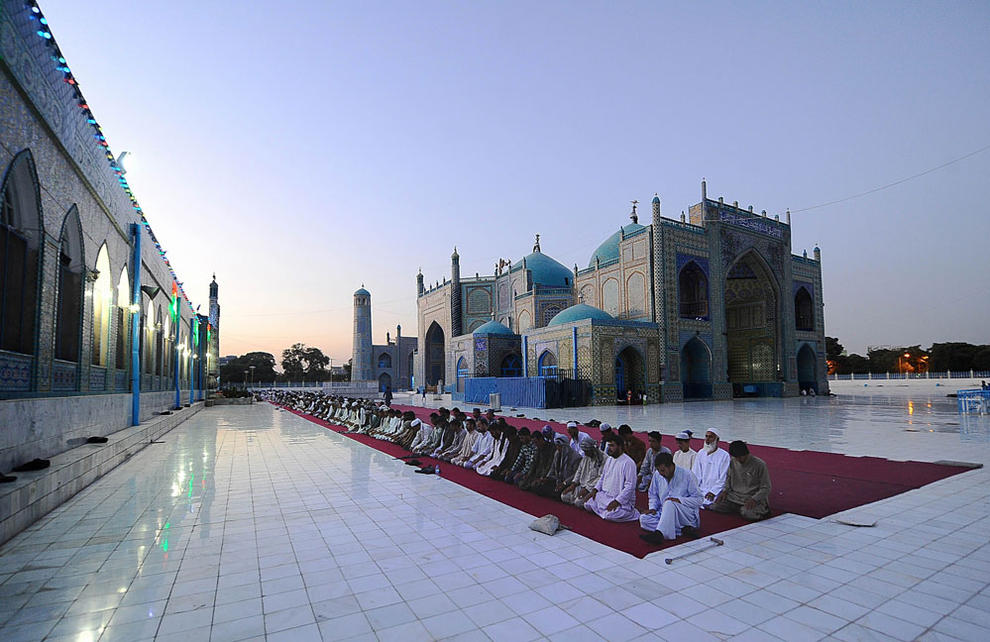
Ramadan is a significant month for Muslims and non-Muslims alike. Everyone from all walks of life notice a change in Qatar’s daily activities, but not everyone may understand its importance to the Muslim culture.


Three Doha women share their insights on what Ramadan means to their families and social circles.


Ramadan is beyond the act of fasting. The five pillars of Islam include the importance of the purification of the soul, turn to God, and practice sacrifice. It is abstaining not just from food but from negativity in actions, words, and thoughts. It is also about relationships with the family and the community.


A Qatari named Reem says that Ramadan is a spiritual journey. It also allows her to bond with her family and spend more meaningful time with them.


According to her, “It’s such a family affair and a moment of bonding for families as you’re in the kitchen together and at the dining table together. It’s exhausting, but very special and my favourite time of the year.”


Hend Zainal is a working mother and wife, and the holy month is a great opportunity to refocus and see things from a different perspective. Ramadan gives her the chance for a spiritual recharge. Normally, her life is so hectic and busy that she appreciates the chance to reset her priorities and reflect on her everyday life. She also gets to catch up with relatives whom she barely sees outside Ramadan.


Fasting


Fasting is a Ramadan tradition that exempts young children, pregnant women, the elderly and the ill. But Hend says that at seven years old, she had her first experience of fasting in a friendly competition with her brother. “I wasn’t obliged to but I remember going through recess and my friends started to eat a burger in front of me and it was such torture. Needless to say I broke my fast that day.”


According to Amaney Neihoum, a Libyan expat residing in Qatar for several years with family, Ramadan in the U.K., Egypt, Libya, and Qatar is each a different experience. It was easier in the U.K. because the sunset was 4:30pm.


Breaking Fast


Fasting all day long gives food a significant role and brings people together. Families try to make a conscious effort in eating healthily and not overeating during Ramadan.Generally, after breaking the fast, families tend to eat together thus giving rise to a variety of best ramadan buffets in doha by the local hotels and restaurants.


A variety of salads and side dishes is served, which is important because “if you’ve been fasting all day, these side dishes are lighter and more manageable,” says Amaney.


Water is crucial, and drinking enough each night before fasting is important. It is advised to drink three to five litres of water to hydrate the body before fasting.


Charity


It is a Ramadan custom to share food among their neighbours or to people in need. It is a way of making up for the days when they are not able to fast.


Exchanging of food can be a way of bringing families together. “There are many expat families and Qatari families who are struggling; and the good thing about Qatar is we all know each other so we keep everyone in mind and help,“ according to Reem. “This happens in so many Qatari households, where you can come and be fed without anything being expected in return.”


Aside from food, Muslims also give a part of their earnings to charities or to people who are in need. Hend says, “The whole idea is to put yourself in the shoes of someone less fortunate.”


Garangao


Garangao is like “a Muslim Halloween party” which celebrates children who have been able to memorize 15 chapters of the Qur’an. Others also say it is honors the Prophet Mohammed’s grandson, Hassan. This children’s festival is celebrated mostly in the Gulf, where children are dressed up in traditional Qatari clothes. Traditional songs are sung and kids carry a pouch to collect sweet treats around the neighborhood.


Ramadan for Non-Muslims


Hotel Iftars are available for non-Muslims who are interested in the celebration of Ramadan. Buffet deals in doha are designed for expats, and Qataris prefer home meals with the family. Reem declares that fasting “is exhausting and all I want to do is go home and break fast, whilst if you’re out of the house you have to make more effort and have to be alert.”


Hind also assents. “What you would see in a hotel Ramadan tent is very different to what you would see in a Qatari home. It’s more family orientated at home and more geared towards refraining from overdoing, “ she says. “In hotels they are obliged to put more and more of everything and there’s typically entertainment.”


Qatar Ramadan Family Traditions

Read More

Copyright © 2014 Daily Qatar
| Designed With By Blogger Templates
Scroll To Top